Heatwave Encounters
One way to spend the morning during a canicule in Paris.

In this small park of the 13th arrondissement de Paris, how many species can I identify or enumerate through sight, sound, and smell?
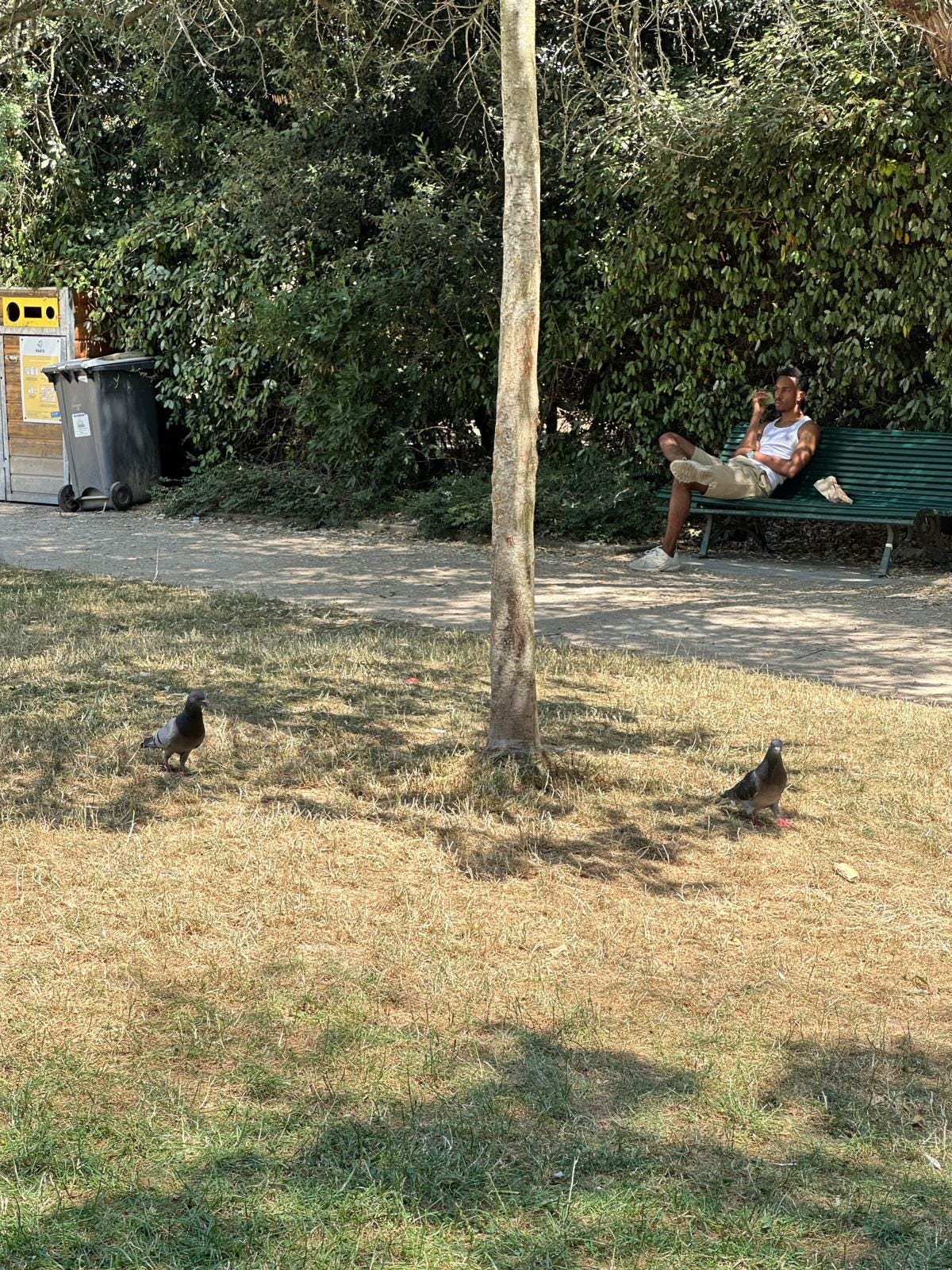
First and most obvious, humans1 of all ages. The youngest are loudest and whiniest, exclaiming common calls such as “Qui part à la chasse perd sa place” or the even more primitive, “WAHHH WAHHH WAHHHHHHH.” An older man walks past slowly, and politely asks for the time. I tell him it’s 11h45. He shuffles on, sticking to one side of the path. All flock to the shade on a hot day.
There are birds, of course. I see one pigeon2 with white and slate grey feathers, and probably a pigeon feather on the ground. Earlier I heard cooing that sounds like pigeon song. The loudest birds3 have a chirping, high-pitched repetitive call. At a similar pitch there’s a variation and I can’t tell if they’re the same species. Far off above the rooftops, I see swifts4 flying, black against the luminous blue sky. A small insect zooms past, closer to me—a fly5?
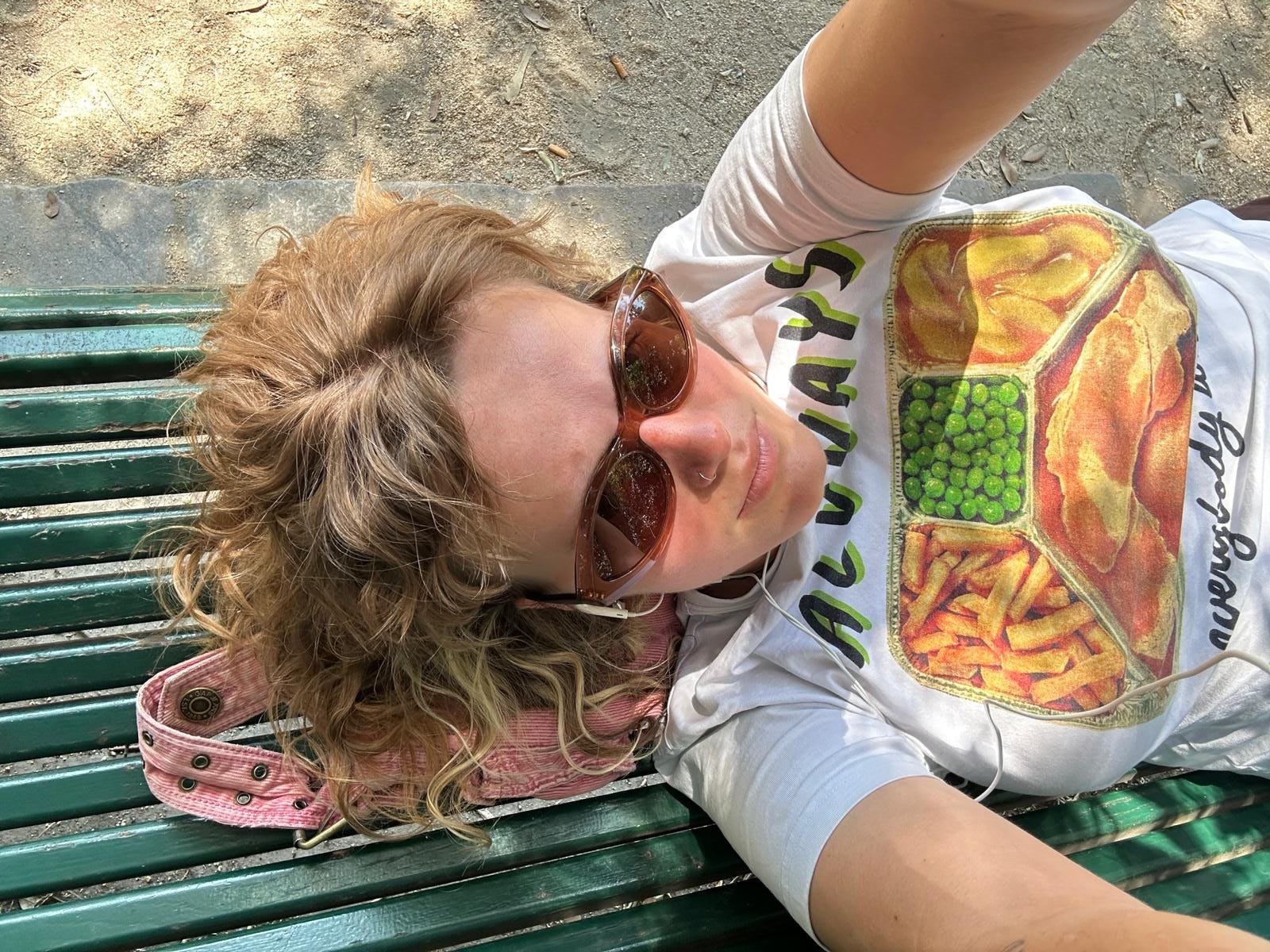
As I lay down on the bench and look up, I see plant matter dangling down an unmistakable spider6 thread; the web sprawls between branches just above.
The bench’s chipping dark green paint echoes the scaly, fibrous trunk of the tree above, with oval, light green leaves—its leaves resemble an olive tree’s, but not it’s trunk. Maybe a eucalyptus7? I look closer at the bark and see ants8 crawling over it.
To the left and right of this tree are two specimen of another species, with darker green pointed leaves that bunch up at the end of undulating branches—what sort of tree9 is it? Some of its leaves in one zone have holes through which the sun shines—a parasite10of some sort?
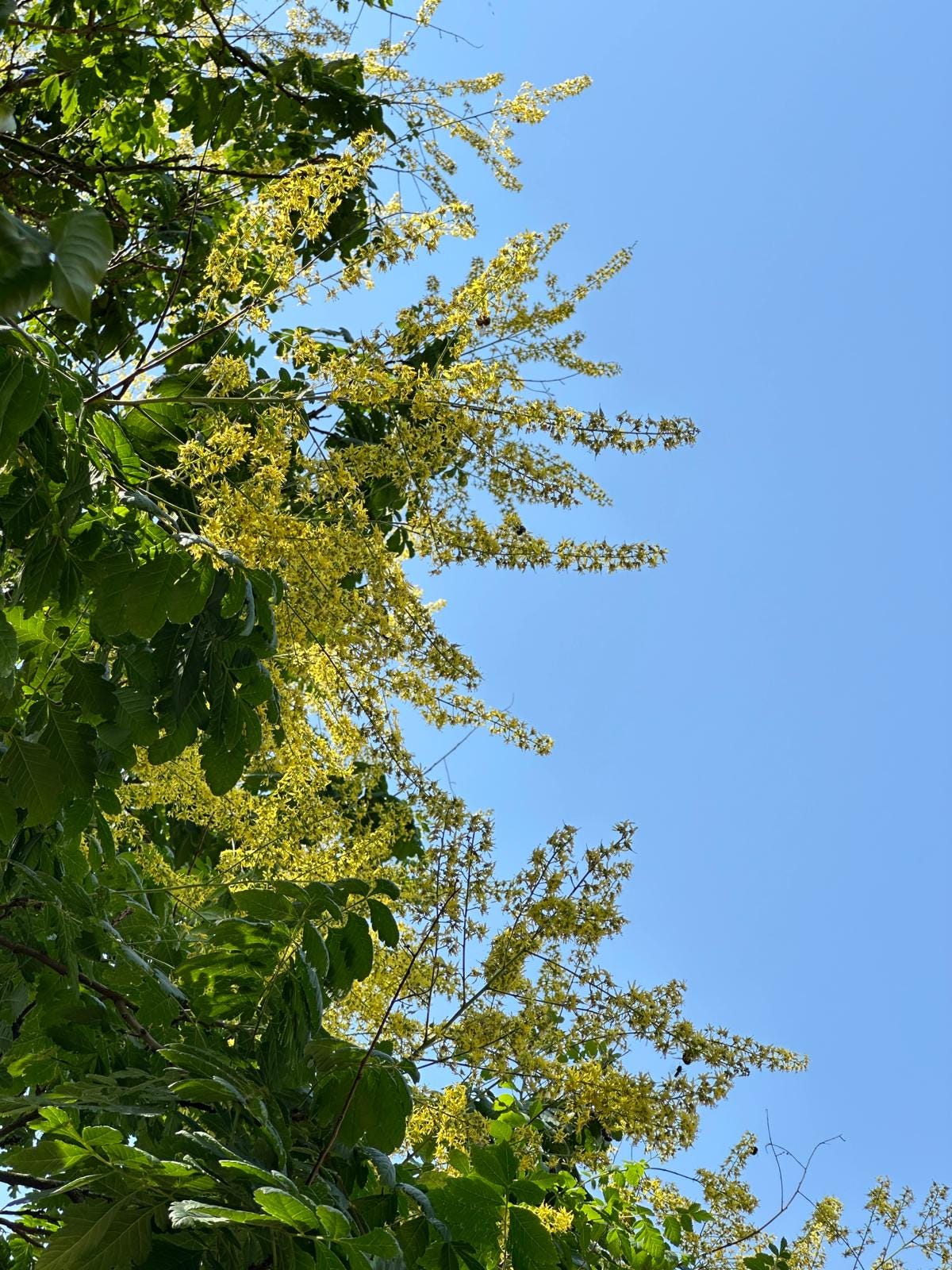
Across from me beyond a sandy path is a lawn, mostly brown and yellow following the heatwave. From where I’m sitting it looks to mostly be made of grass11. There are four trees (12-15) planted within the lawn, which provides a small bit of shade—I don’t know what any of these trees are except that they’re all different. To the right, the tuftiest (though not tallest) tree has large, richly green pointed leaves, it looks like it could be a fruit tree based on vibes, but I don’t see any fruit or flowers12. Then there’s a tree which seems to have both green and yellow leaves—or is it yellow flowers13? I’d have to get closer to be sure. I might be the three that has those airplane propeller leaves but I forget the name. The last three trees are small14 and tall15, and a bit far away to make out but I’m sure I don’t recognize them. From where I set I can see the full range of plants around this central lawn, and there are many so rather than try to describe the all, I’ll try to see first if I can just tally them: I counted 24 species16.


I’m fairly confident that with a small margin of error, there are at least that many more species of trees, bushes, and plants.
A bug17 that looked a bit like a large fly briefly landed on my hand.
A toddler behind me just announced, “Y’a une GROSSE arraignée !”
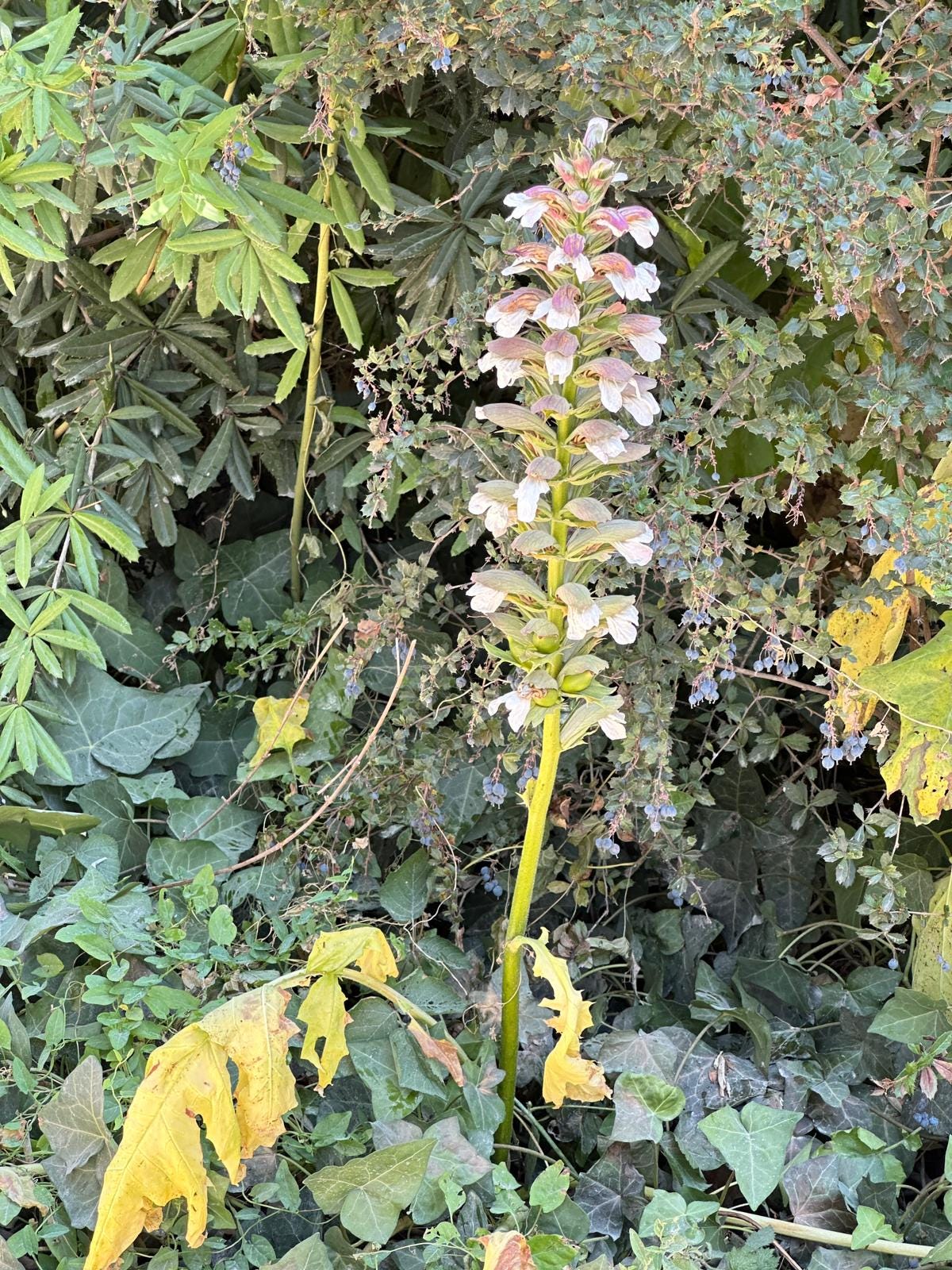
I was looking around again and spotted a flower18 I recognized but don’t know the name of. The longer I look at the lawn I think there’s at least one more hardy weed19.
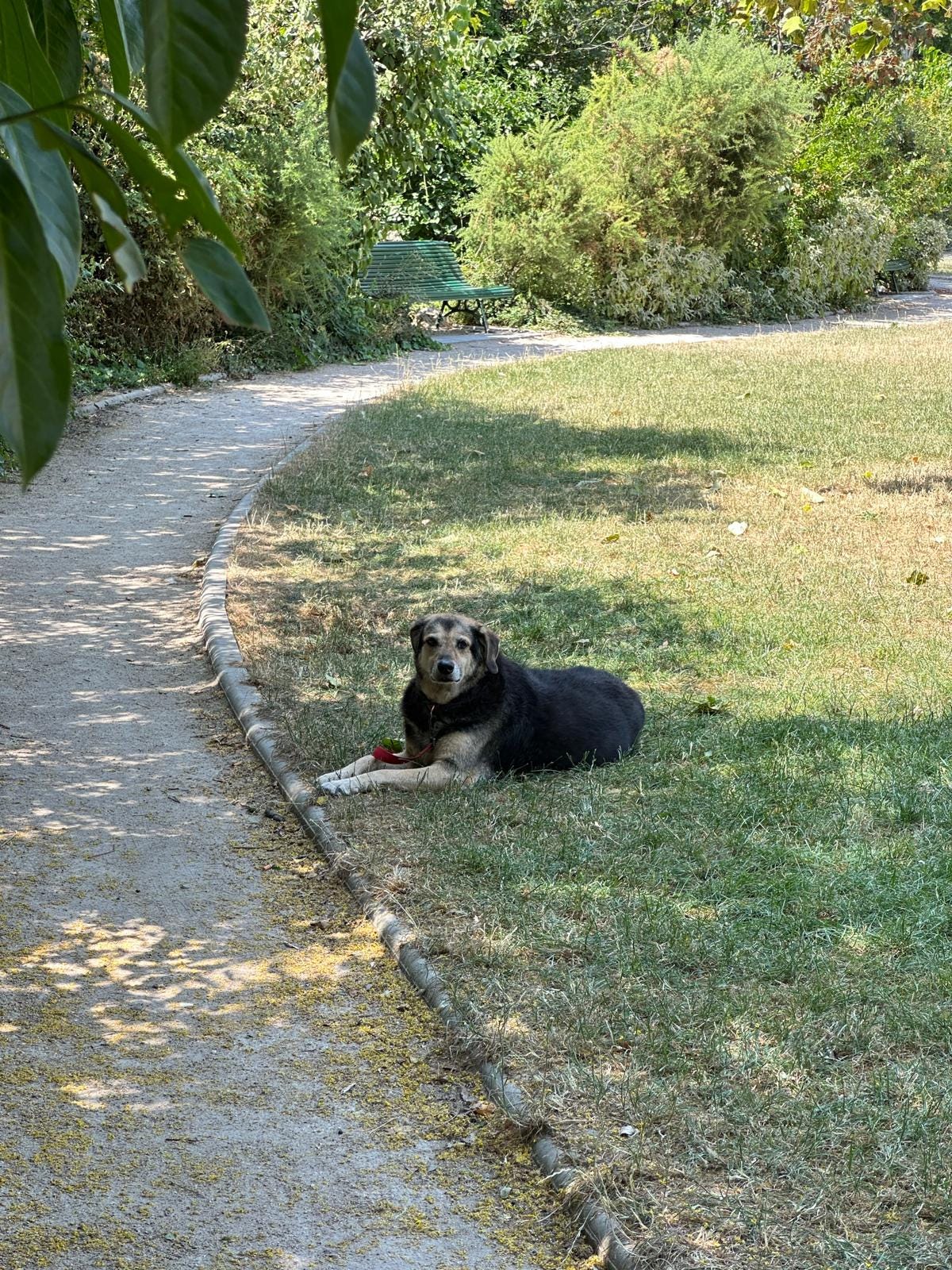
These things take a while to write down and tally, but really are things I can at least glance at with a quick scan in front of me. Beyond my senses, I can also deduce some likely neighbors: some urban rats or other manner of scavenger; WAY more bugs, the better to feed the birds and spiders with; more species of bird, I hope; an occasional pet dog20; and probably more plants that I haven’t manager to count. And that’s disregarding all manner of fungus, lichen, moss or bacteria.
That’s at least 50+ species right at my fingertips.
I think one tree with beautiful yellow flowers might be a mimosa21—though hasn’t the season passed?
In an attempt to “get to know” these species, which I enumerated and described to the best of my limited ability in-person, I then used some digital tools to identify some specific species. Nice to put a face to a name! For birds I used the Merlin Bird ID app, and for plants I used PictureThis.
As I walked around the garden methodically photographing every plant, a group of older men called out to me to make sure I didn’t miss what they said was a Japanese cherry tree.
—C’est un cerisier, one said
—Un cerisier du Japon! the other clarified.
These four men frankly did not look very wholesome from afar but one of them got up enthusiastically to point it out to me when I didn’t see it immediately, walking me over and assuring me the fruit was edible.
—Y’en a qu’en haut maintenant des fruits par ce que j’ai mangé tous les autres !
I told him he was quite right to help himself to the fruit, especially in this heat! He laughed and walked back to his friends, having completed his mission of guiding me. I didn’t manage to grab any of the high-up fruits, but I did take pictures.


My app assures me based on five different photographs that it is, in fact, a European plum. The essential thing is that the fruit is, indeed, edible.
As soon as I leave this garden I will be literally much lonelier: people take up so much space in this city of ours, so poorly built to withstand the weather we’ve inflicted upon ourselves and all of these other species. I wonder how well they’re coping? The grass doesn’t love it. Will the trees have smaller rings from this ear? Should there be far more sorts of birdsong?
I came to this garden to get out of the house, and leave around 14h30 when it starts to get too hot even in the shade. This week, it has never been more sensorially obvious to me how much cooler it is under a mass of foliage than between old stone buildings. As I have biked through Paris during this canicule, the only semblance of breeze funneled out from between the leaves of the jardins divers et variés de Paris.
What a powerful protection we have deprived ourselves of. I will be seeking out the trees al summer. I hope to get to know them better, and everyone else who lives among them with me.
These “loudest” birds were House Sparrows! The app also picked up on a Spotted Flycatcher, though since these are rare I wonder whether the app just mistook a particularly high-pitched sparrow-song.
The Merlin Bird App confirms they’re Common Swifts.
Possible fly not pictured.
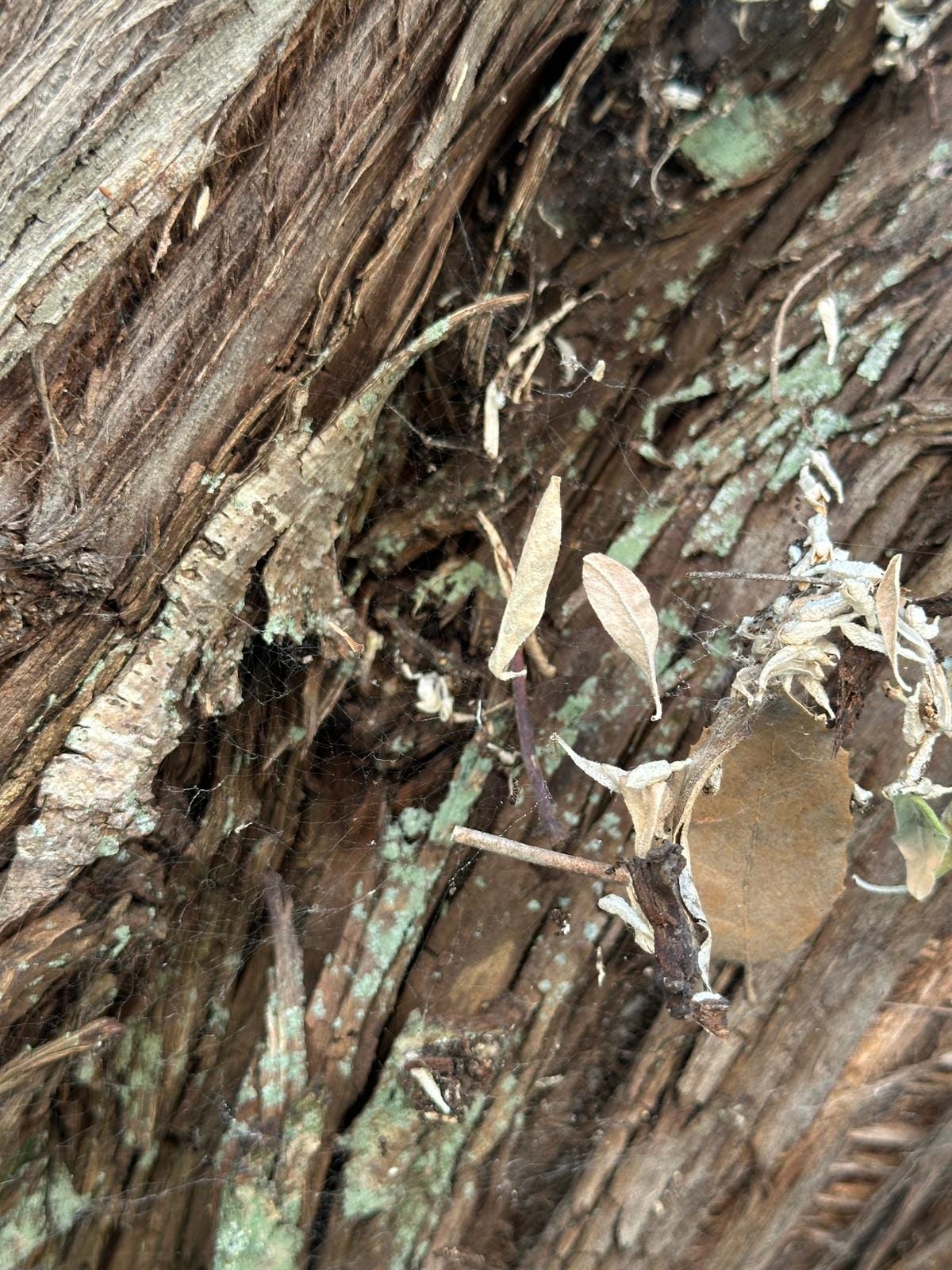
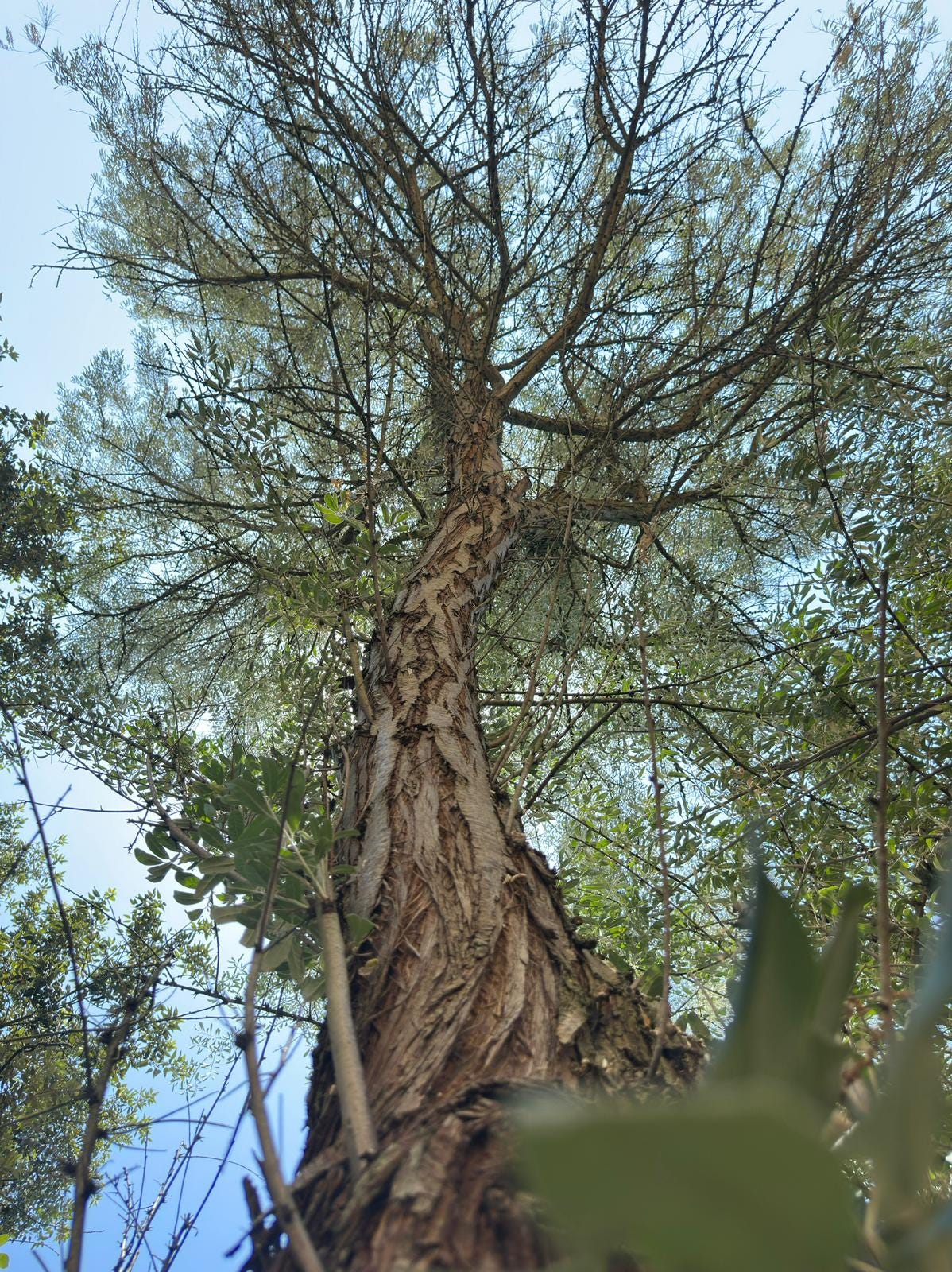
Ants not pictured.
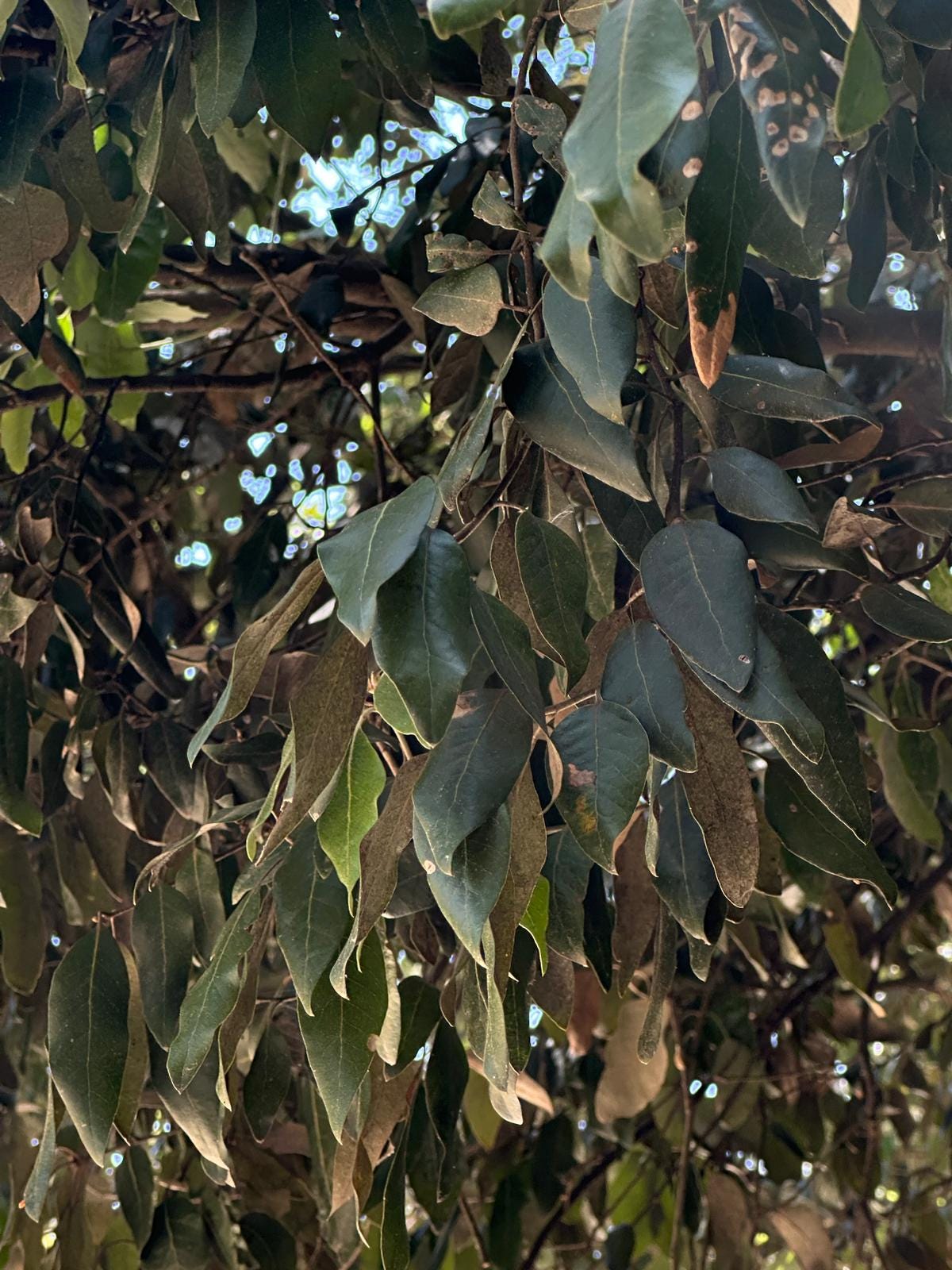
Parasite not pictured.
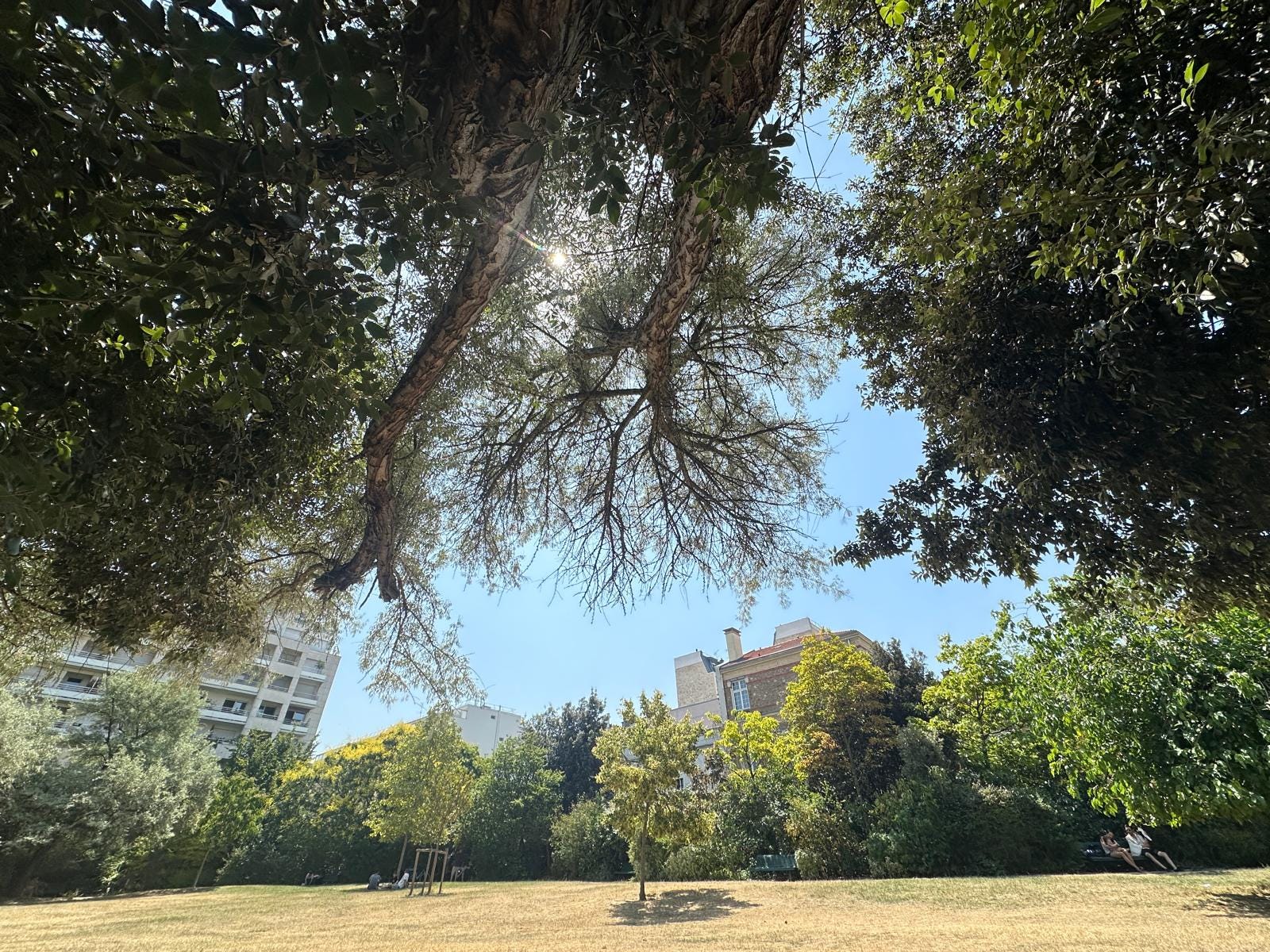


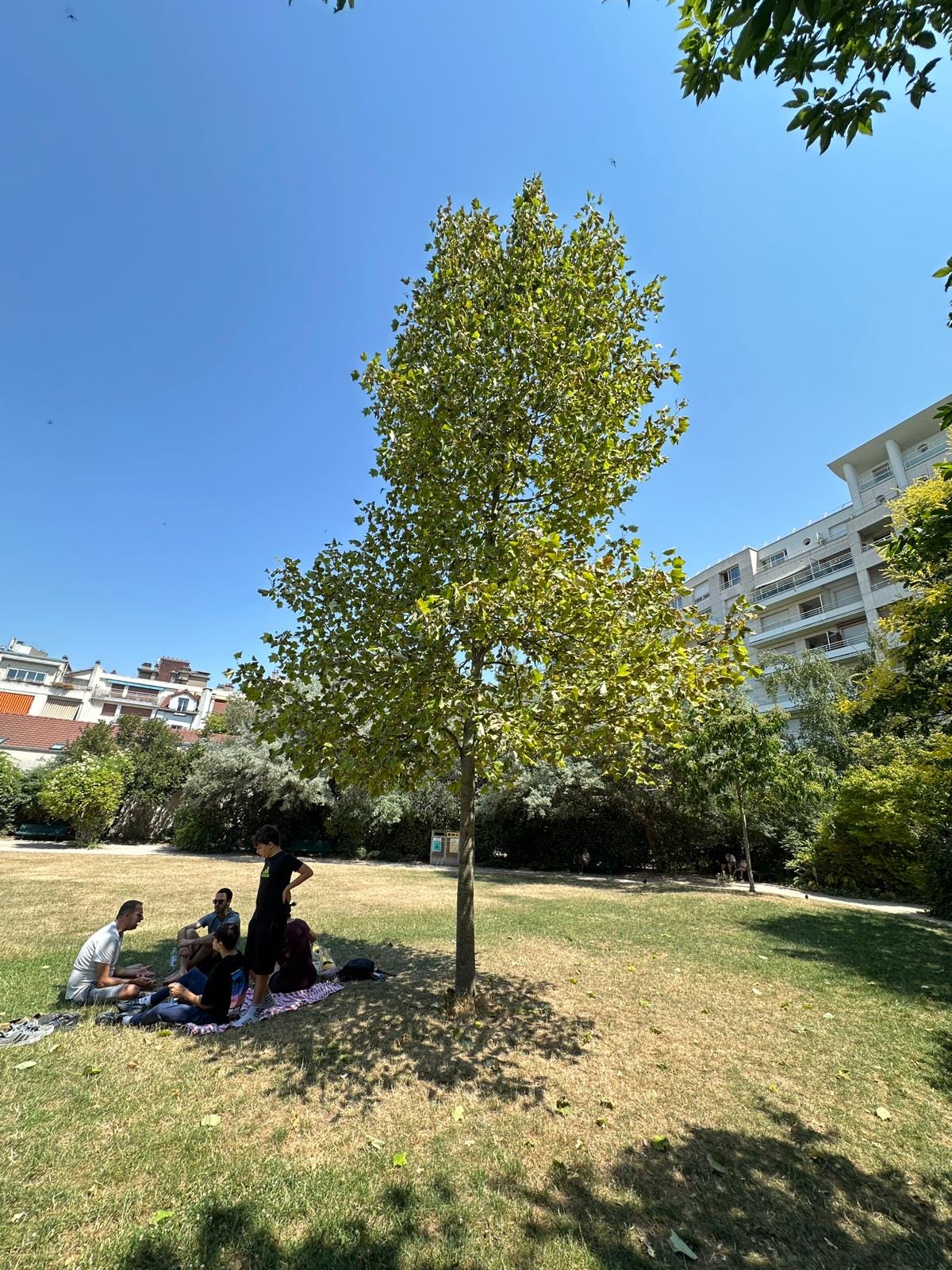
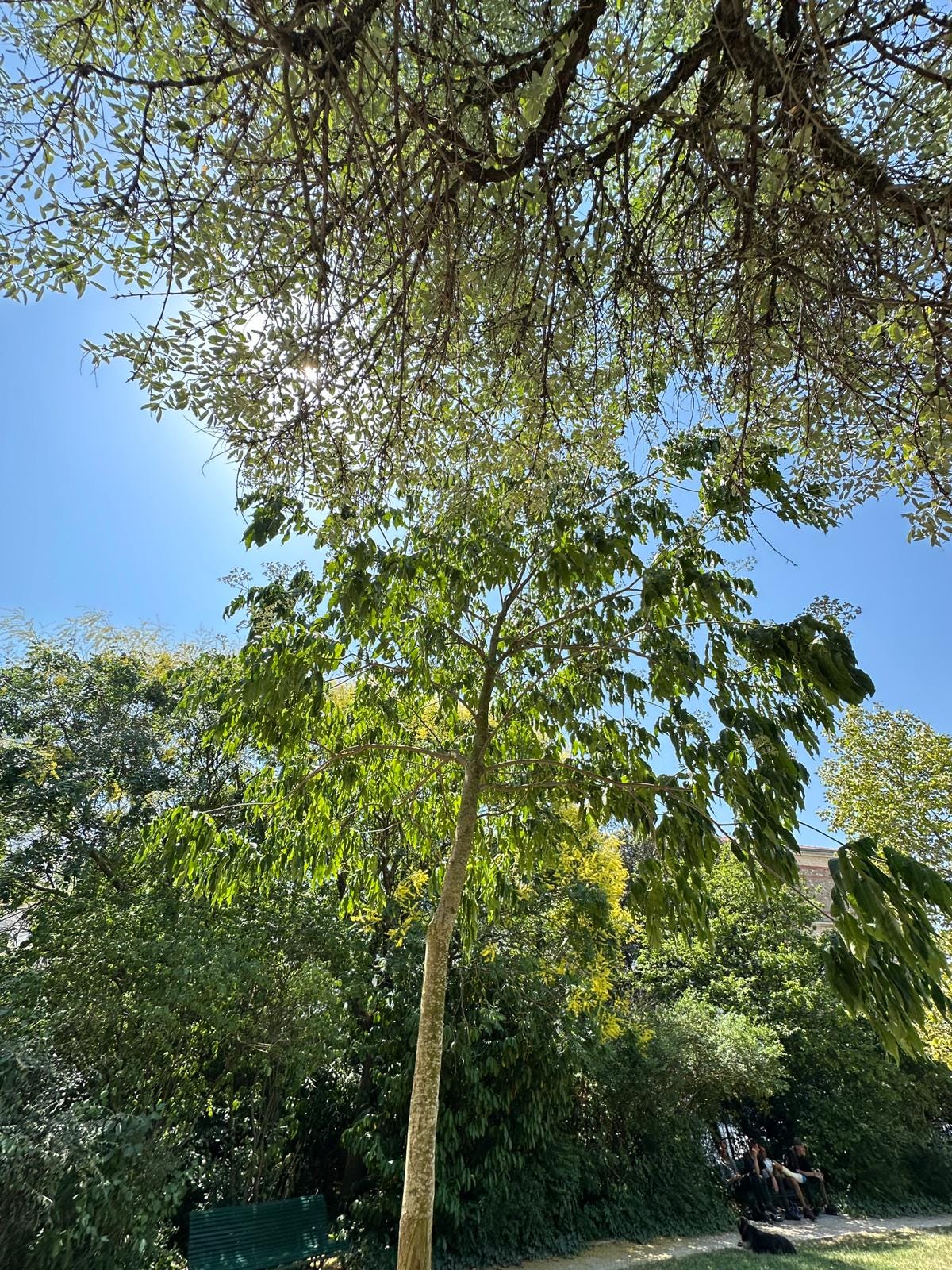
Includes: Evergreen rose, Darwin’s barberry, common yew, goldenrain tree, narrow-leaved mock privet, blueblossom, abelia, baby’s breath spirea, thorny olive, cherry laurel, common lilac, narrow-leaved lupin, northern red oak, pomegranate, common lilac, cherry plum, sycamore, shrubby Jerusalem sage, common gorse, coralberry, evergreen oak, beauty bush, common hornbeam, cherry plum, cherry laurel, bear’s breech, lady’s banks rose, chaste tree, wine grape, star jasmine, Chinese wisteria…
Bug not pictured.
Not specifically pictured; refer to the lawn picture.